Parsi
Like Sugar in Milk: The Genomic Reality of Parsi Ancestry
According to the 16th-century epic Qissa-e-Sanjan, when the first Zoroastrian refugees fled Persia and landed on the shores of Sanjan, Gujarat, the local king, Jadi Rana, sent them a vessel filled to the brim with milk—a polite, symbolic message that his kingdom was entirely full.
In response, the Parsi priests added a spoonful of sugar to the vessel without spilling a single drop. This counter-gesture promised that they would blend seamlessly into the land, enriching it without causing it to overflow.
Culturally, this beautiful story has come to define the Parsi community: a perfectly preserved, resilient group that has thrived while maintaining an elite, uninterrupted lineage from ancient Persia. But when modern genomics peer into the cellular reality of this legendary assimilation, we find a story that is even more profound.
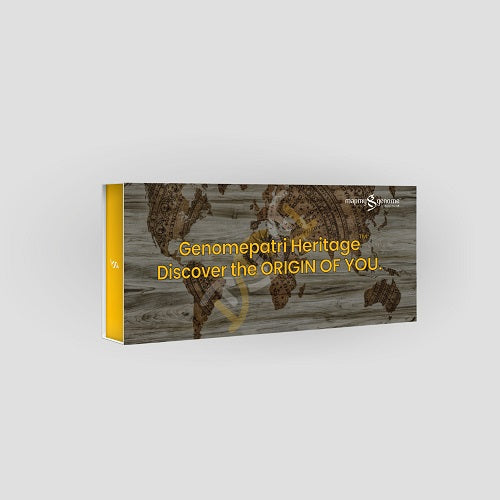
Through Genomepatri Heritage, Mapmygenome bridges the gap between historical folklore and high-resolution DNA sequencing, proving that Parsis didn’t just blend into India culturally—they became part of its biological fabric.
Sweet sugar in milk,
Persian kings and Indian queens,
Code tells the true tale.
Deconstructing the Myths: Cultural Narrative vs. Genetic Reality
A landmark study led by the Centre for Cellular and Molecular Biology (CCMB), Hyderabad, using high-resolution autosomal and uniparental markers from both modern and ancient Parsi skeletal remains, officially mapped the Parsi genome. The data reveals a stunning narrative of sex-specific migration and ancient romance.
| The Cultural Stereotype / Myth | The Genotypic Reality Uncovered by DNA |
| Absolute Genetic Isolation: The belief that the Parsi community remained entirely unadulterated by local Indian DNA from the moment they stepped off the boats. | A Gender-Split Assimilation: DNA reveals a fascinating asymmetric migration pattern. While paternal lines (Y-DNA) trace back directly to the Near East, nearly 48% of ancient maternal lineages (mtDNA) are strictly South Asian/Gujarati. The first Parsi men literally integrated by marrying local women. |
| Identical to Modern Iranians: The assumption that Parsis share an identical genetic profile with present-day citizens of Iran. | Closer to Neolithic Iranians: Because Parsis left Persia around the 7th century during the Islamic conquest, their DNA acts as a time capsule. They are genetically closer to Neolithic Iranians than modern Iranians, who have since undergone subsequent waves of admixture. |
| Enforced Uniformity: The idea that their distinct physical characteristics are exclusively the result of Middle Eastern ancestry. | Enriched Homozygosity: Over the 1,200 years following their initial mixing, centuries of strict community endogamy created high levels of homozygosity (shared genetic segments), locking in a distinct genetic isolate. |
What Genomepatri Heritage Uncovers About Parsi Roots
Genomepatri Heritage utilizes advanced SNP microarray technology to parse through thousands of genetic markers, providing an undeniable window into this unique ancestral timeline.
-
Persian & West Asian Components: Discover your exact percentage of alignment with ancestral Middle Eastern and Caucasian reference populations, mapping the precise signature of pre-Islamic Persia.
-
Uniparental Lineage Split: Track your deep maternal (mtDNA) and paternal (Y-DNA) haplogroups. See firsthand if your maternal line contains the ancient local Gujarati signature or the original Persian lineage.
-
Haplotype Sharing: Pinpoint exactly how much of your DNA aligns with ancient West Eurasian migrations compared to modern South Asian populations.
The Data-Driven Biohacker’s Insight: The Parsi genome is one of the world‘s most compelling genetic resources. It represents a highly specific demographic transition frozen in time. Testing this DNA doesn‘t just show where you came from; it maps a unique evolutionary bottleneck.
Beyond the Past: Longevity, G6PD, and Your Future Health
For the Preventive Planner, understanding Parsi ancestry is a critical healthcare asset. The same centuries of endogamy that preserved the Parsi identity also created a highly distinct medical genomic profile.
The Longevity Trait
Mitochondrial sequencing projects of the Zoroastrian-Parsi community have revealed a high frequency of distinct genetic variants linked to longevity. Parsis are statistically a long-lived community with noticeably lower incidences of certain malignancies, such as lung cancer. Mapping these variants helps identify your inherent protective factors.
The G6PD Vulnerability
Conversely, isolated gene pools can concentrate certain risks. The Parsi population exhibits one of the highest global frequencies of Glucose-6-Phosphate Dehydrogenase (G6PD) deficiency—affecting up to 25% of the community in some cohorts.
-
This X-linked enzyme deficiency makes red blood cells highly vulnerable to oxidative stress.
-
Exposure to certain common triggers—such as fava beans, specific antimalarials, or particular antibiotics—can trigger acute hemolytic anemia.
By pairing the historical insights of Genomepatri Heritage with our comprehensive health panel, Genomepatri, you unlock the ultimate personalized wellness strategy. You can screen for specific conditions like G6PD deficiency, understand your metabolic rate, and capitalize on your ancestral longevity traits.
Ready to read the history written in your cells? Order your Genomepatri Heritage kit today and discover the true story of how sugar met milk.
Frequently Asked Questions (FAQs)
How does Genomepatri Heritage differentiate between Parsi ancestry and other Indian ancestral groups?
Because Mapmygenome is a pioneer in Indian genomics, our reference database features extensive, localized South Asian genetic profiles alongside global and Middle Eastern datasets. We look specifically for the elevated West Eurasian/Neolithic Iranian components and unique patterns of haplotype sharing that distinguish the Parsi genome from neighboring Gujarati or Sindhi populations.
What does "sex-specific admixture" mean in Parsi history?
Genomic studies of ancient Parsi remains excavated from Sanjan, Gujarat, revealed that while paternal markers (Y-DNA) remained predominantly West Asian, roughly 48% of maternal markers (mtDNA) belonged to indigenous South Asian haplogroups. This proves that the early Parsi migration was mostly male-led, and these men married local Indian women, perfectly mirroring the "sugar in milk" proverb at a biological level.
Why is screening for G6PD deficiency so important for individuals of Parsi descent?
Due to generations of marrying within a compact community, the genetic variant causing G6PD deficiency is highly prevalent among Parsis. Knowing if you carry this variant is vital for preventive healthcare, as it allows you to avoid specific oxidative medications, chemical triggers, and foods that could cause sudden red blood cell breakdown.
Can this test tell me if I have the genetic markers for longevity associated with the Parsi community?
Yes. By upgrading or pairing your ancestry test with our flagship Genomepatri health panel, we analyze specific mitochondrial and autosomal variants linked to exceptional longevity, cellular repair efficiency, and lower baseline risks for specific age-related conditions.