Anglo Indians
The Living Bridge: Decoding the Global Crossroads of Anglo-Indian DNA
To step into the world of the Anglo-Indian community is to experience a highly unique, vibrant cultural tapestry. It is a world of elegant ballroom dances, perfectly brewed high tea, a distinct dialect of English, and culinary masterpieces like the legendary railway mutton curry and coconut rice.
Historically defined by the Government of India Act of 1935 as those whose father or any of whose other male progenitors in the male line is or was of European descent but who are domiciled within India, the Anglo-Indians are a living testament to India’s colonial past.
Culturally, the community has long been viewed through a purely Western lens—often stereotyped as an exotic, temporary colonial artifact or an entirely European enclave separated from the Indian mainland. But when we look past the vintage photographs and church registers, the cellular reality tells a far more fascinating story.
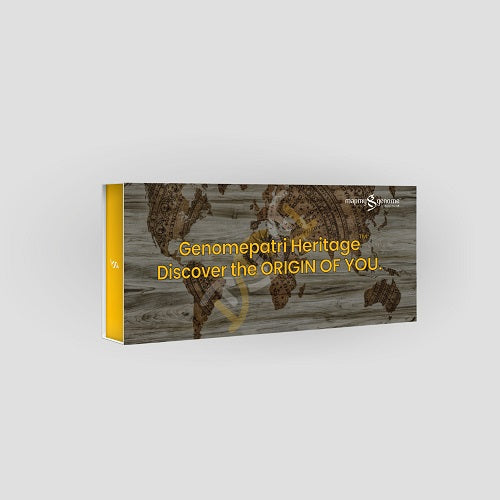
Through Genomepatri Heritage, Mapmygenome decodes the complex code written in your cells, revealing that the Anglo-Indian genome isn‘t a historical footnote—it is a beautifully preserved, high-resolution map of recent human admixture and cultural resilience.
Two worlds in one blood,
Sails of old meet southern shores,
Echoes in the code.
Deconstructing the Myths: Cultural Narrative vs. Genetic Reality
When modern population genetics analyzes the DNA of the Anglo-Indian community, it replaces singular cultural assumptions with an elegant, data-backed history of global convergence.
| The Cultural Stereotype / Myth | The Genotypic Reality Uncovered by DNA |
| A Purely European Monolith: The belief that Anglo-Indians possess an entirely foreign genetic profile that shares nothing with mainland India. | An Asymmetric Global Mosaic: Autosomal DNA reveals a profound sex-biased admixture. The Anglo-Indian genome is a distinct blend of incoming European paternal lines and indigenous South Asian maternal lines. |
| A Fleet-Footed, Transient History: The assumption that because the lineage is relatively recent, their DNA is a chaotic, unpredictable mix with no distinct signature. | A Frozen Genetic Isolate: Following the initial centuries of mixing during the colonial era (Portuguese, Dutch, French, and British), the community developed distinct social circles and practiced endogamy, effectively "freezing" this unique genetic ratio in time. |
| Identical to Modern Western Europeans: The idea that an Anglo-Indian’s biology is identical to a citizen living in London or Lisbon today. | A Unique Metabolic Hybrid: Because their DNA combines South Asian and European ancestries, Anglo-Indians possess a unique genomic architecture that influences their physical traits, drug metabolism, and health risks differently than either parent population. |
The Data-Driven Deep Dive: Unpacking the Sex-Biased Admixture
For the Data-Driven Biohacker, the Anglo-Indian genome is an extraordinary case study in recent historical genetics. Unlike ancient migrations that occurred tens of thousands of years ago, the Anglo-Indian lineage took shape over the last 300 to 400 years, providing a crystal-clear look at genetic admixture.
Paternal Lineages (Y-DNA)
When tracking the Y-chromosome, which is passed down strictly from father to son, genomic testing reveals an overwhelmingly West Eurasian/European footprint. Depending on family history, these markers map directly to specific haplogroups prevalent in the British Isles (such as R1b), the Iberian Peninsula, or Western Europe, capturing the literal arrival of European maritime traders, soldiers, and railway engineers.
Maternal Lineages (mtDNA)
Conversely, when we look at mitochondrial DNA, passed down from mother to child, the European signature largely disappears. It is replaced by a rich diversity of indigenous South Asian macro-haplogroups (such as Haplogroup M and R). This serves as undeniable biological proof that the founding mothers of the Anglo-Indian community were native to the Indian subcontinent.
What makes this population truly unique to geneticists is that after a specific historical window, this admixture stopped mixing outwards. The community’s distinct social clubs, churches, and marital customs created a genetic boundary, preserving this exact 50/50 or regional hybrid ratio across generations.
The Preventive Planner‘s Perspective: The Hybrid Health Blueprint
Unlocking a genetic heritage shaped by recent global admixture is an invaluable asset for your personalized, preventive healthcare in 2026. Your DNA carries a combination of evolutionary traits from two entirely different geographic zones, directly influencing how your body processes modern lifestyles.
The Metabolic Mismatch
South Asian populations carry an inherent genetic predisposition to insulin resistance, type 2 diabetes, and premature coronary artery disease (CAD)—often referred to as the "thrifty genotype." When these indigenous maternal health risks combine with European paternal genetic factors, it creates a highly unique metabolic profile.
Pharmacogenomics & Skin Health
-
Drug Metabolism: The unique blend of European and South Asian liver enzymes (CYP450 gene family) means that Anglo-Indians may metabolize common medications—such as cardiovascular drugs, painkillers, or statins—differently than standard European or Indian reference groups.
-
Dermal Phototypes: Variations in melanin-producing genes inherited from both lineages can influence skin sensitivity, vitamin D synthesis efficiency, and baseline risks for UV-related skin conditions.
By pairing the historical insights of Genomepatri Heritage with our flagship health panel, Genomepatri, you transition from tracing your family tree to securing your biological future. You can identify your personalized cardiovascular risks, discover your body‘s exact nutritional and vitamin needs, and build a proactive healthcare strategy tailored uniquely to your hybrid DNA.
Ready to read the global history written in your cells? Order your Genomepatri Heritage kit today and discover the true story of the living bridge written in your DNA.
Frequently Asked Questions (FAQs)
Can Genomepatri Heritage tell me which specific European country my ancestors came from?
Yes. Genomepatri Heritage analyzes thousands of genetic markers (SNPs) and compares them against a highly detailed global reference database. The test can break down your European ancestral percentage into specific regional clusters, helping you identify whether your paternal roots lean toward the British Isles, Iberia (Portuguese), or Western Europe.
What does "sex-biased admixture" mean in Anglo-Indian history?
Sex-biased admixture occurs when one gender dominates the genetic input from a specific migrating population. In the case of Anglo-Indians, genomic data shows that European inputs came almost exclusively through paternal lines (Y-DNA from European men), while the indigenous inputs came through maternal lines (mtDNA from Indian women), perfectly mirroring the community‘s historical origin stories.
How does Mapmygenome distinguish Anglo-Indian DNA from other Indian lineages?
Because Mapmygenome is a pioneer in Indian genomics, we maintain an extensive, highly localized database of South Asian populations alongside diverse global reference panels. We look for a distinct, recent co-existence of West Eurasian autosomal segments alongside indigenous South Asian haplogroups, a pattern that uniquely characterizes the Anglo-Indian genome.
Why should an Anglo-Indian individual pair an ancestry test with a health test?
Because the Anglo-Indian genome is a recent hybrid of European and South Asian lineages, individuals inherit a unique combination of health risks from both parent populations. Pairing Genomepatri Heritage with the Genomepatri health panel gives you a comprehensive medical blueprint, allowing you to screen for unique metabolic traits, drug responses, and cardiovascular predispositions to optimize your longevity.