World Immunization Day During The Pandemic
Nov 07, 2020
7148 Views
You’re probably familiar with the word ‘vaccine’ thanks to all the noise being made about the development and implementation of a “corona vaccine”. Here’s where it’s important to point out, right off the bat (it’s just IPL time, and I can’t help myself), that vaccination and immunization are two different things. We’ll be talking about these right now, but not in the context of the corona virus as it is important for researchers to develop a vaccine that proves to have more benefits than harm, and actual efficiency through clinical trials before we can have an actual conversation about a corona vaccine. We’ll all just have to be patient and focus on the things we know work — social distancing, wearing a mask, and hand-washing. Yes, we’re all exhausted with the pandemic, and really wish this were over already, but it isn’t. So we must continue to #staysafe.
What this blog is about, is immunization in the context of overall health. Why, you ask? Because November 10th is World Immunization Day and, COVID-19 or not, babies are being born, and immunization is proven to be a successful and cost-effective means to preventing illness, and saves millions of lives every year.
What is immunization?
Immunization is the process of helping an individual become immune or resistant to an infectious disease, typically by the administration of a vaccine. According to the World Health Organization, immunization is “a key component of primary health care and an indisputable human right.” Statistics reveal that about 2-3 million deaths every year can be prevented with proper immunization; however, 18.7 million infants globally have not been provided with basic vaccines. In fact, in the year 2019, 20 million children missed out on lifesaving measles, diphtheria, and tetanus (DPT) vaccines.
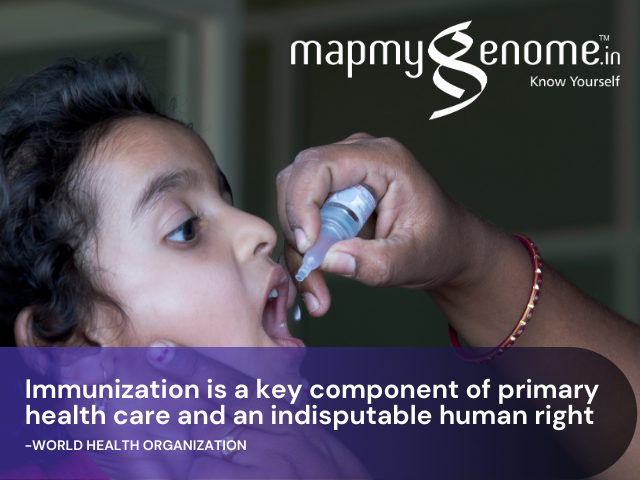
In India despite having one of the largest Universal Immunization Programs (UIP) for over 30 years now and all vaccines available free of cost, the UIP has been able to immunize fully only 65% children in the first year of their life. The increase in coverage has plateaued; this reflects trends across the globe. This not only puts millions of children at risk of preventable death, but also seriously increases the chance of reversing progress made and elevating the real risk of seeing some eradicated illnesses “return” on account of complacency, lack of awareness, and myths surrounding vaccinations. See below for the top 3 myths surrounding immunizations/vaccines.
What exactly is a vaccine?
A vaccine is biologic preparation aimed at providing immunity against infectious agents (such as bacteria and/or viruses). Vaccines typically contain a dead or a weakened microbe and helps your immune system develop immunity by simulating an infection. Because the “infection” is not by a live microbe at full potency, the body responds to the microbe (introduced via a vaccine) by triggering an immune response that helps develop antibodies (part of our immune system that fights off acquired infections) without the symptoms of the illness. Vaccines provide immunity without causing illness.
A slight fever is common after vaccination, and means that the immune system has already started doing its job. However, if you notice a fever of over 99°F, or if you feel that your child isn’t okay, trust your gut and speak with a physician. In most cases, post-vaccination fever resolves on its own, and antibodies developed from vaccination confer enough immunity to recognize and fight off a future infection if ever exposed to that particular infectious agent. Ideally, vaccination programs help develop herd immunity through mass immunization against infections that are transmitted directly from person-to-person. Herd-immunity made you go back to corona virus, didn’t it? All I have to say at this point is four things: social distancing, wear a mask, wash your hands, and read on.
What are the top 3 common myths and misconceptions about immunization/vaccines?
1. A clean, hygienic home eliminates the need for vaccines
While it certainly is important to keep one’s living environment clean in order to minimize infections and to safeguard health, infectious illnesses can be spread and acquired despite good hygiene. Timely vaccinations are the only way to ensure the prevention of life-threatening infections.
2. A single vaccination is enough to provide immunity
Vaccines help develop immunity by mimicking an infection. This kind of infection, however, almost never causes illness, but it does cause the immune system to produce antibodies that will fight against the particular microbe. While some vaccines provide immunity after a single dose, some vaccines require repeated administration for complete, lifelong immunity. This repeated vaccination is called a “booster”. Examples of vaccines that need boosters include MMR (measles, mumps, rubella), DPT (diphtheria, pertussis, tetanus), chickenpox, HPV, and the flu vaccine (yes, even adults need vaccination boosters). Be sure to discuss with your doctor the vaccinations that need a booster and ensure that you (and/or your child) gets the required vaccination on time.
3. Vaccines can cause autism
This is something I hear from time-to-time when consulting with parents. This is not true. There is a LOT of misinformation on the internet about this one, but the truth is that, because children diagnosed with Autism Spectrum Disorder (ASD) often start to show signs at a similar age as when immunizations are made, it is understandable that some inaccurate correlations are made by parents trying to understand what may have caused their child’s autism. While there is no single cause of ASD (ASD is considered to be caused by a combination of genetic and environmental factors) research has revealed that there is no association between autism and immunization, including the MMR vaccine. Common genetic causes of ASD include Fragile-X syndrome, Neurofibromatosis Type 1 (NF1), Tuberous Sclerosis Complex (TSC).

So, what should I do now?
In addition to sharing this blog with every new (or to-be) parent, you should speak with your child’s pediatrician (and maybe even your own physician) about vaccinations that are appropriate for your child (and/or you). These may be scary times with the COVID-19 pandemic, but do not skip your child’s vaccinations. Speak with a pediatrician about your child’s vaccination schedule and while this pandemic has disrupted our lives, don’t allow it to disrupt your child’s vaccination schedule. It is very important that babies and children get routine vaccinations in order to protect them from serious illnesses.
The pandemic has shown us how serious infections can be, and how important vaccines are in the development of life-saving immunity. And the truth is that as much as we’d like a COVID-19 vaccine, we don’t have one. But what we do have is clinically and historically well-established, effective, and safe vaccines that can protect children from serious illnesses. It is important that as many people as possible get vaccinated.
To conclude, these are scary times, and it is understandable that you’re worried about your child’s safety during this pandemic. It is also important to understand that when enough people are vaccinated, it helps protect not only individuals, but society. Speak with your child’s pediatrician to set up an appointment to give your child access to safe vaccination. This pandemic will end one day (yes, it will. We don’t know when, but it will), and our children are going to be the future. Don’t let fear keep your bundle of joy from getting the vaccination they need to live a long and healthy life. Set them up for a successful inning. And we’re back to IPL. Let’s pretend, just for now, that IPL stands for Immunization for Pediatric Lives and just get the kids vaccinated. Remember the words from the W.H.O.? Immunization is “an indisputable human right”.
Continue to stay safe, everyone!
About the Author

Pooja Ramchandran is a pioneer in the field of genetic counseling in India and VP Genetic Counseling at Mapmygenome. She has been practicing clinical genetic counseling in India since graduating from Johns Hopkins University in 2008. She is a much sought-after expert in a niche profession and, being the first genetic counselor in the country with a formal degree in genetic counseling, she is committed to establishing the genetic counseling profession in India. When she is not offering her expertise as a genetic counselor, Pooja is a stand-up comedian.